



Michael Schumacher, Ayrton Senna and Alain Prost are, without doubt, three of the greatest drivers to ever get behind the wheel of a Formula 1 car.
Collectively, they have 14 World Championships and 183 Grand Prix wins between them.
While Senna and Prost largely drove in a different era from Schumacher, there was some overlap after the German made his F1 debut in 1991.
Indeed, after Prost returned to the grid at the start of the 1993 season following a one-year sabbatical, the three legends had a full season battling it out on track against each other.
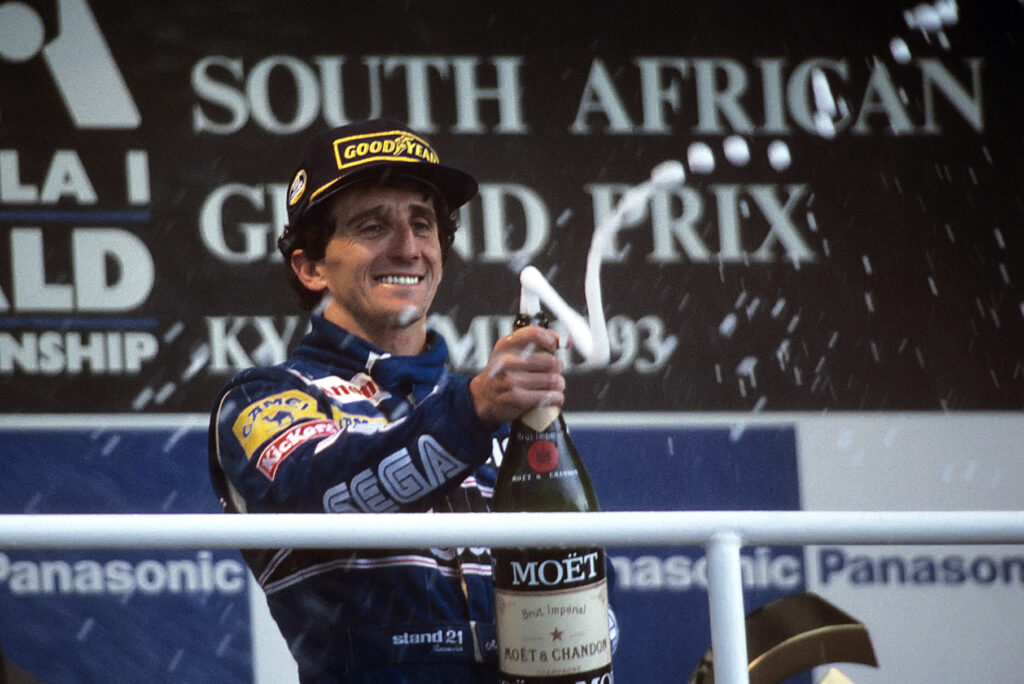
Incredibly, during this time, they would only ever achieve a remarkable statistic once.
Michael Schumacher, Ayrton Senna and Alain Prost only shared the Formula 1 podium once
In the 1993 Formula 1 season, all three drivers raced for British outfits, with Senna at McLaren, Prost at Williams, and Schumacher at Benetton.
Across the season, Prost would finish on the podium in 12 of the 16 races held as he won his fourth and final World Championship.
Senna, who finished that season second in the standings, would find his way onto the rostrum seven times, while Schumacher did so in each of the nine races he found the chequered flag.
| Position | Driver | Constructor | Wins | Podiums | Points |
| First | Alain Prost | Williams-Renault | 7 | 12 | 99 |
| Second | Ayrton Senna | McLaren-Ford | 5 | 7 | 73 |
| Third | Damon Hill | Williams-Renault | 3 | 10 | 69 |
| Fourth | Michael Schumacher | Benetton-Ford | 1 | 9 | 52 |
However, despite this remarkable rate, the three drivers would only find themselves together on the podium once, at the 1993 Spanish Grand Prix.
At the Circuit de Catalunya, Prost would take the top step, finishing 16 seconds ahead of Senna and 27 seconds ahead of Schumacher.
In a show of how dominant each was in that race, they were the only drivers to finish on the lead lap, with every finisher from Riccardo Patrese in fourth lapped at least once.
Ayrton Senna put in a magnificent performance in 1993 to compete with Alain Prost
In 1993, Williams had by far the best car on the grid, a range of technological advancements placing them head and shoulders above the competition.
This followed their dominant season in 1992, during which Nigel Mansell won the Drivers’ Championship with five races to spare and the team won the Constructors’ Championship with similar ease.
With Mansell unable to agree on a new contract with the British team, however, Prost and Damon Hill were to pick up the mantle and defend Williams’ crowns.
While the duo were successful in this, Prost winning the Drivers’ Title and the team winning the Constructors’ Championship, Senna somehow managed to split the two drivers in the final standings.
The Brazilian would also notch five victories across the season, with the most special of these coming at his home Grand Prix in Sao Paulo.
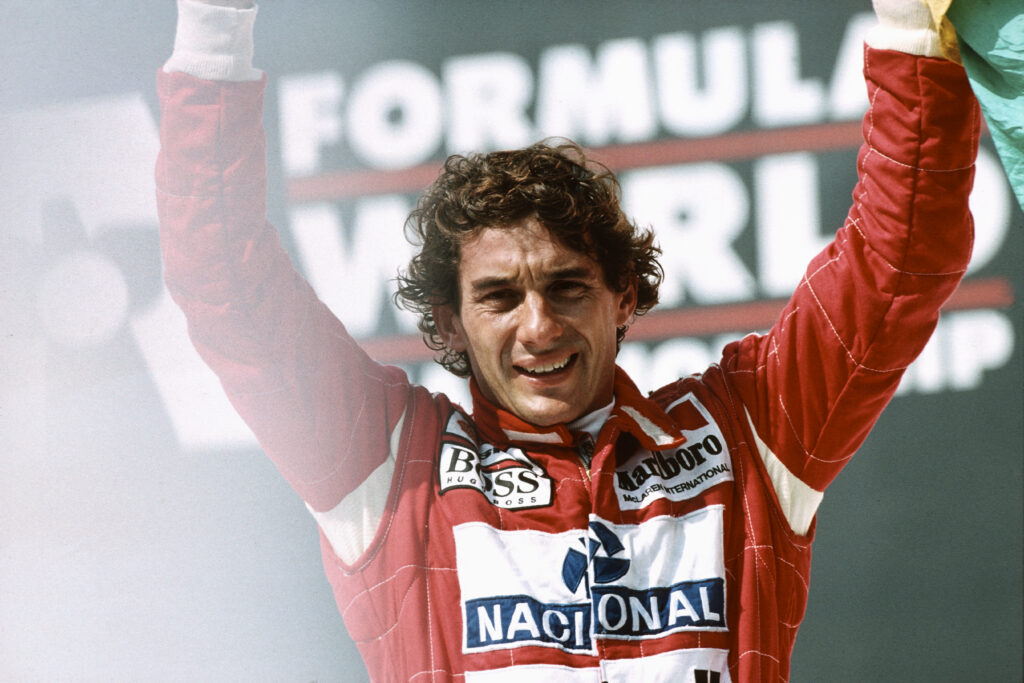
Senna would also win the Monaco Grand Prix that season, his fifth consecutive victory around the Principality and his sixth in total, still a record.
Achieving such a feat and that many wins with vastly inferior machinery simply adds to the class of the Brazilian who is, without doubt, in the conversation for the greatest Formula 1 driver of all time.