
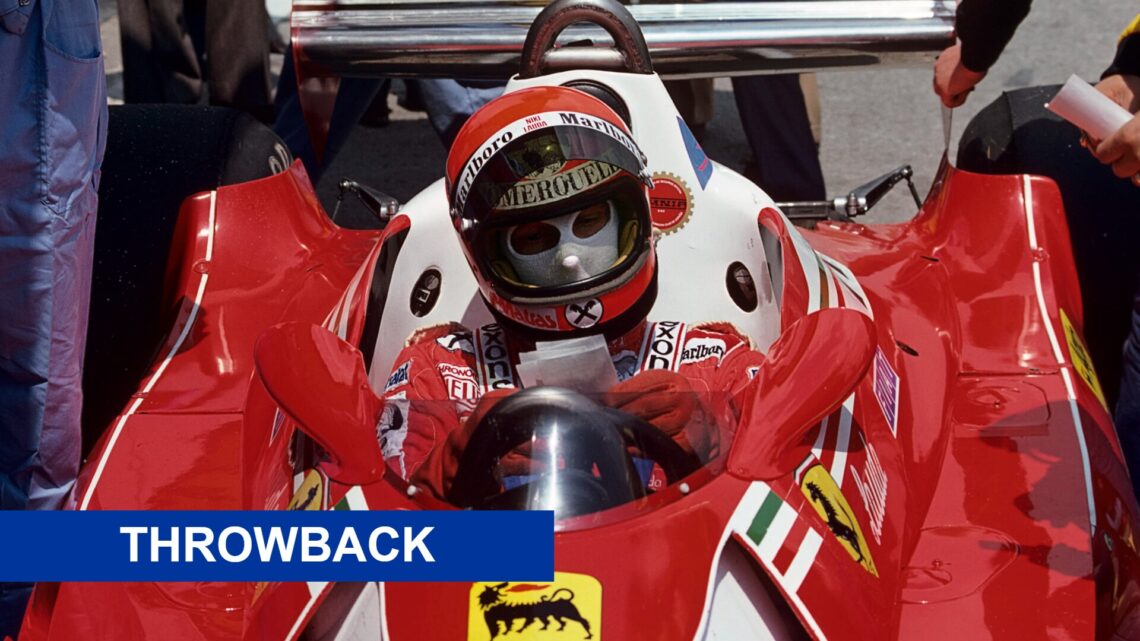


Niki Lauda made his triumphant return to the German Grand Prix a year on from his Nürburgring crash to win at Hockenheim.
A year removed from his horrific crash at the Nürburgring, which saw him engulfed in flames and hospitalised, Lauda made a heroic return to Germany and won the German Grand Prix 12 months later.
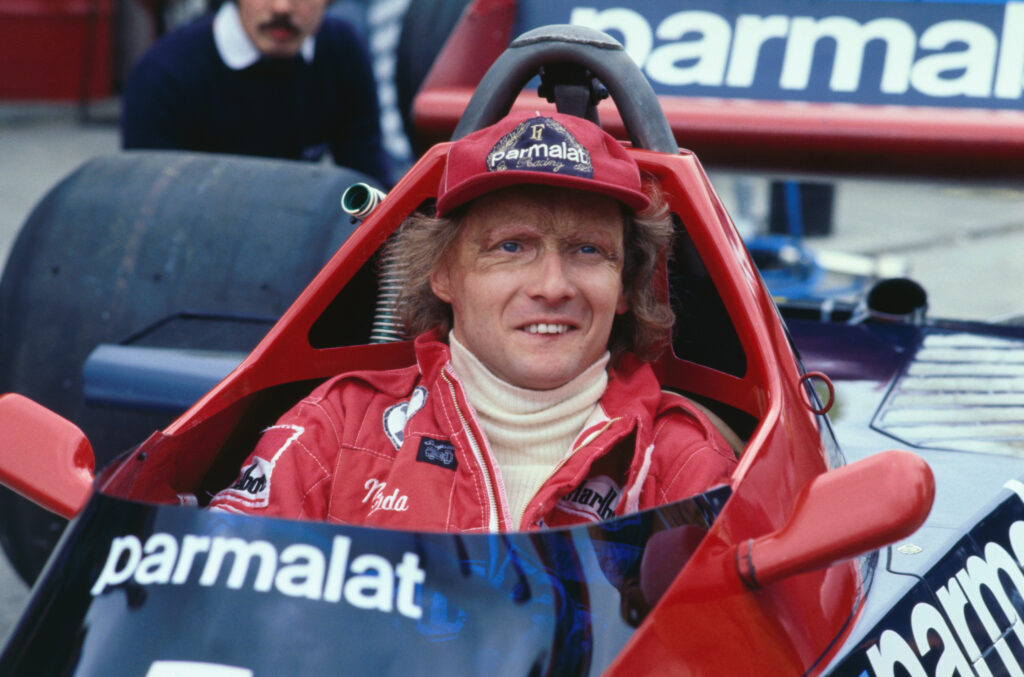
Not only was it a superhuman achievement for Lauda to return to the sport and win, but it was also a crucial result for the 1977 championship. Here, we relive Lauda’s triumph.
Niki Lauda survives near-fatal crash, returns to Formula One six weeks later
In August 1976, at the German Grand Prix held at the Nürburgring, Lauda’s Ferrari burst into flames. He inhaled toxic gases and sustained severe burns to his face and lungs.
He was given little chance of survival, but Lauda made a courageous return just six weeks later at the Italian Grand Prix, finishing 4th. That season, he narrowly lost the 1976 title to James Hunt, withdrawing from a rain-soaked final race in Japan with safety concerns.
But by 1977, Lauda was back on top form and entered the German Grand Prix as the leader in the Drivers’ Championship.
Niki Lauda returns to the German Grand Prix for the first time after his Nürburgring crash
Following Lauda’s crash in 1976, Formula One moved the German Grand Prix to Hockenheim. However, the return to Germany, just one year after his Nürburgring crash, was a psychological hurdle for Lauda.
The race result was pivotal to the championship battle. Lauda was in control, but Mario Andretti in the Lotus was hot on his heels, looking to mount a late-season comeback with his revolutionary ground-effect car.
A large swing of points would solidify Lauda’s position in the championship for what would be one of the greatest comeback stories of all time.
Niki Lauda beats rival James Hunt to win the 1977 German Grand Prix
Lauda trailed James Hunt, his 1976 championship rival in the McLaren, at the start of the race. But this would be a war of attrition. On lap 13, Hunt would retire with an engine failure to give Lauda the lead. Hunt was one of 13 drivers not to finish.
Lauda controlled the race from there. His Ferrari was rapid and reliable all season long, and that was no different on this day in Hockenheim. He won by 14 seconds over Jody Scheckter in the Ford.
Lauda now led the championship by 10 points over Scheckter, a significant margin in the era’s nine-point win system. After 11 races, Lauda now needed only solid points scoring in the remaining races to secure the second Drivers’ Championship of his career.
Niki Lauda’s legend is resilience
Lauda’s career is defined by resilience. He is one of F1’s all-time greats, and this is exactly why.
He returned six weeks after a near-fatal crash with the drive to fight for the 1976 championship. And that championship came down to the final race of the season.
The next season he was back to being the best driver on the grid. He dominated the competition, showing no fear despite his life-threatening moment not even a year prior.
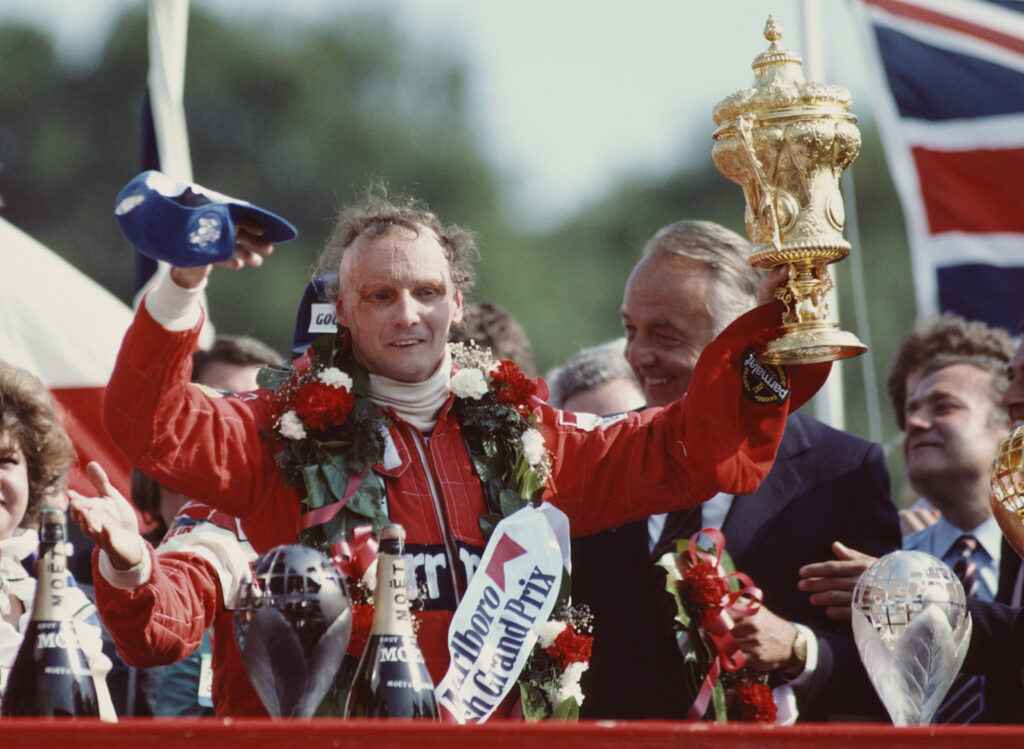
Lauda was presented with another mental challenge a year on from his crash. And on his return to Germany, he showed no fear. As drivers dropped like flies, Lauda cruised to the win on the way to his second of three world championships.
He left Ferrari for Brabham at the end of that season, then returned from retirement to win the 1984 championship with his former rival, McLaren.