



The Sport Review ranks the greatest F1 drivers of all time, from the legendary Michael Schumacher to Max Verstappen to Lewis Hamilton.
From Italian Giuseppe Farina, who won the championship’s first iteration with Alfa Romeo, to the current Drivers’ World Champion Max Verstappen, there have been a myriad of legendary competitors.
While perhaps there may be a new addition to the list following the 2025 season, it’s important to appreciate the history of this great sport.
Debates are continually held to discuss which drivers can claim the privilege of being the greatest of all time, with varying results.
The question can finally be answered as the ten drivers who defined the sport will be analysed to assess who is the greatest F1 driver of all time.
10. Fernando Alonso
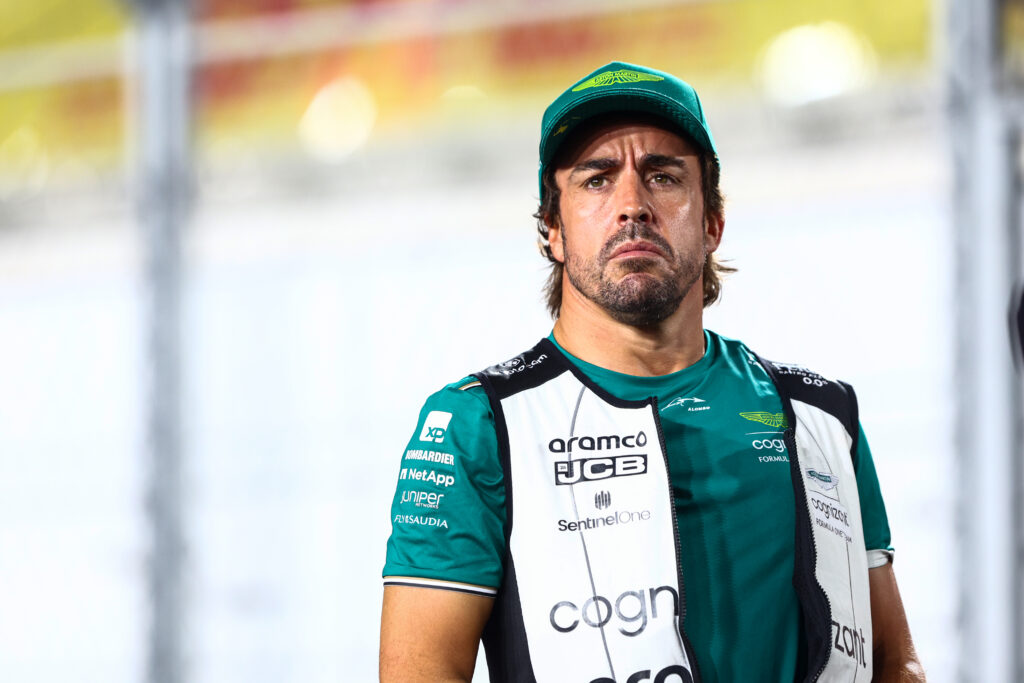
Fernando Alonso has the most starts of anyone in Formula 1 with 410, and his longevity has broken numerous records.
He holds the record for the most laps completed in F1 with 22,244 laps as of the 2025 Spanish Grand Prix and has driven the furthest distance of any driver in history with 111,392 kilometres so far.
Yet the Spaniard shows no sign of retiring and at 43 years old, he still has a while to go to be the oldest driver in the sport’s history. Louis Chiron is the current record holder at 55 in the 1955 Monaco Grand Prix and beat his own record to make it 58 once again at Monaco three years later, but did not qualify.
Alonso has won two World Championships back-to-back in 2005 and 2006 with Renault and was, at that time, F1’s youngest double world champion.
In 2005, he won seven races with six pole positions and 14 podium finishes to make 133 points in total. ‘Magic Alonso’ scored points in all but two of the 19 races that season and battled Finn Kimi Räikkönen for the title, with Renault’s reliability winning out over the McLaren despite lacking in speed.
That same year, he pulled off a masterful overtake on the legendary Michael Schumacher in Japan, passing him on the outside at one of F1’s most demanding corners at 208mph and forcing the German to back out. He famously said that he knew the Ferrari driver would not risk it as ‘At times like these I always remember that Michael has two kids’. Alonso was only 24 years old.
The following season, the Oviedo-born driver was fighting with Schumacher once more and won six out of the first nine races, finishing no lower than second to lead the championship with 84 out of a possible 90 points. The two were tied on points going into the penultimate round at Suzuka, but Schumacher’s engine failure while leading meant that the Asturian took home first place.
‘El Nano’ only needed one point in the final race for a second title, which he achieved with ease by finishing second.
Alonso said he never doubted that someday he could challenge Schumacher’s dominance.
Alonso has driven for both McLaren and Ferrari and has come close to winning further championships, only narrowly missing out.
His famous rivalry with newcomer Lewis Hamilton at McLaren culminated in an incident where Hamilton disobeyed a team instruction, disadvantaging Alonso, so the Spaniard blocked his young British teammate in the pit lane. He ended the season on the same points as the rookie, both missing out on the championship to Räikkönen, who had since moved to Ferrari.
In 2008, the ‘Spanish Samurai’ scored more points than any other driver in the final five races with 43, finishing fifth that season.
But in 2010 at Ferrari, Nando mounted another title charge. He had won five races that season and went into the final race in Abu Dhabi leading by eight points after being 47 points behind mid-season due to errors. Ultimately, he lost out by 19 points after finishing seventh, allowing Sebastian Vettel to win the race and his first championship.
In 2012, he came within three points of winning his elusive third championship. He had at one stage a 40-point lead, but Vettel had been able to close the gap. He entered the final race 13 points behind the German and needed to finish third and for his rival to finish outside of the points.
He was resigned to being a runner-up once more despite finishing second, as the Heppenheim driver had ended the race fourth. Despite this, his season was commendable; he got maximum pace out of his far-from-fastest Ferrari and showed fighting spirit, intelligent racecraft and mistake-free driving.
2013 was much the same when he was once again second to a dominant Vettel, squeezing out performance from the third-best car on the grid to achieve two wins and a consistently high points haul.
He returned to F1 with Alpine in 2021 following a break and heroically defended against Hamilton to allow his teammate Esteban Ocon to achieve his first win in Formula 1 at the Hungaroring. A third-place finish in Qatar was his highest finish since the 2014 Hungarian Grand Prix.
In 2022, Ocon and Alonso propelled Alpine to fourth in the Constructors’ championship, behind Red Bull, Mercedes and Ferrari.
A difficult relationship with the French team led Alonso to join Aston Martin, where he achieved eight podiums in 2023, including third place on his debut.
He scored 206 of the British team’s 280 points that season, proving he had not lost the drive and competitive spirit.
Alonso’s driving style has often been praised for his understanding of when to extract full pace and when to preserve his tyres, and this has allowed him to not only be an F1 World Champion but also win the 24 Hours of Le Mans twice.
He is the only driver to win both the F1 Drivers’ Championship and World Endurance Championship and has won 32 Grands Prix across 22 seasons.
In his career, he has at one point been F1’s youngest polesitter, race winner and world champion and has been inducted into the FIA Hall of Fame twice, making him a worthy contender.
9. Jim Clark
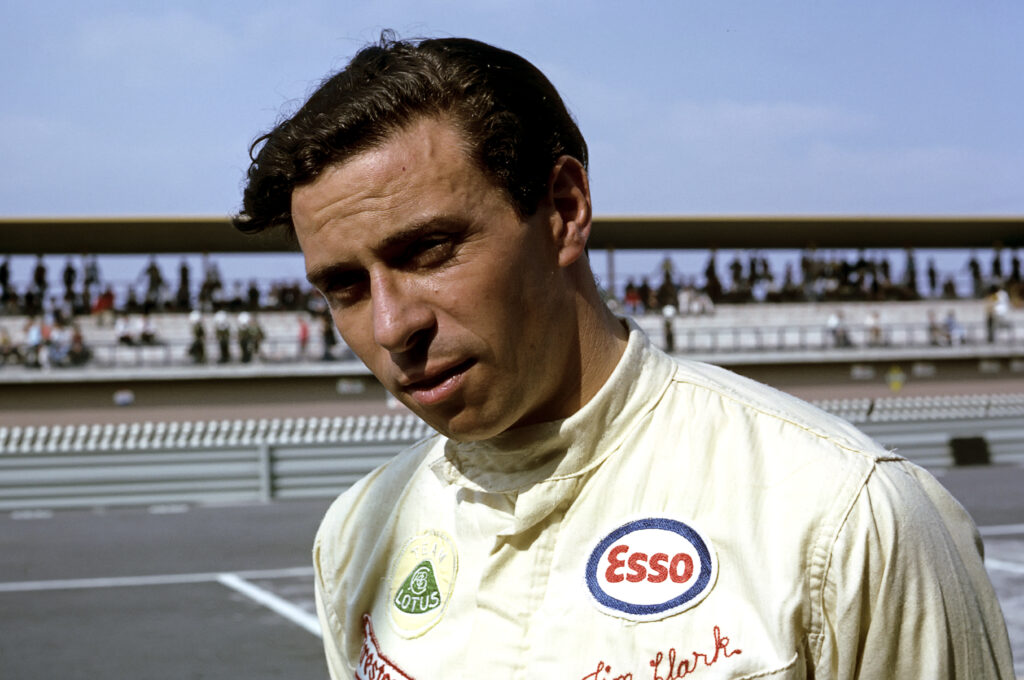
Jim Clark won two Formula 1 World Championships with Lotus in 1963 and 1965.
He made his debut in F1 partway through the 1960 season and in only his second race witnessed two fatal accidents, which would almost put him off racing and a loathing for Spa-Francorchamps, where ironically he would win four times in succession.
In 1961, he was involved in a serious accident at Monza when Wolfgang von Trips’ car collided with Clark’s and went airborne, hitting a barrier and killing Von Trips and 14 spectators. Clark strongly considered retiring after this, horrified by what he had seen.
Over the next four seasons, Clark’s Lotus could only be beaten when the fast but unreliable mechanical elements failed.
The Scot’s 1962 championship win eluded him due to an oil leak during the final race, but in 1963 he came back stronger, winning seven out of ten championship races and easily winning not only his first title but Lotus’ first Constructors’ championship.
He came close to winning the 1964 championship but was once again hindered by an oil leak, which robbed him of the title.
In 1965, the Scottish driver won six of the ten races and won his second F1 World Championship.
However, Clark was not just a F1 World Champion; in the same year, he won the Indianapolis 50,0 which was an iconic feat of motorsport in America and became the first non-American to win it in 49 years, crossing the finish line ahead of his closest competitor by just over two minutes.
He remains the only driver to win the F1 World Championship and the Indy 500 in the same year and the only driver to win multiple championships in a single season, alongside a World Drivers’ Championship, as in 1965 he also won the Tasman Series, French Formula Two and British Formula Two.
In 1968, while leading the F1 Drivers’ Championship once more, Clark died while racing in a Formula Two event in Hockenheim, which shocked the racing community. Clark was famed for never making mistakes and had very few accidents.
Clark has an amazing legacy. At the time of his death, he had more Grand Prix wins and more pole positions than any other driver, including Juan Manuel Fangio, despite winning three fewer championships. The Argentine called Clark ‘the greatest driver ever’.
Clark’s records have persisted long after his death, with his record of the highest percentage of laps in the lead in a season only broken in 2023 by Max Verstappen, 60 years later.
He still holds the record for the most grand slams where he won the race, got pole position, led all laps and got fastest lap with 8 and has the most grand slams in a season, most consecutive grand slams, most seasons with a grand slam, most consecutive seasons with a grand slam and the highest percentage of possible championship points in a season.
The Scot is widely remembered for his shyness and humility outside of the car, uncomfortable with the attention motorsport provided, despite his calm, focused aggression while driving. He did not just win in the best car, as his natural talent allowed him to traverse problems easily. He is almost certainly a great of the sport.
8. Niki Lauda
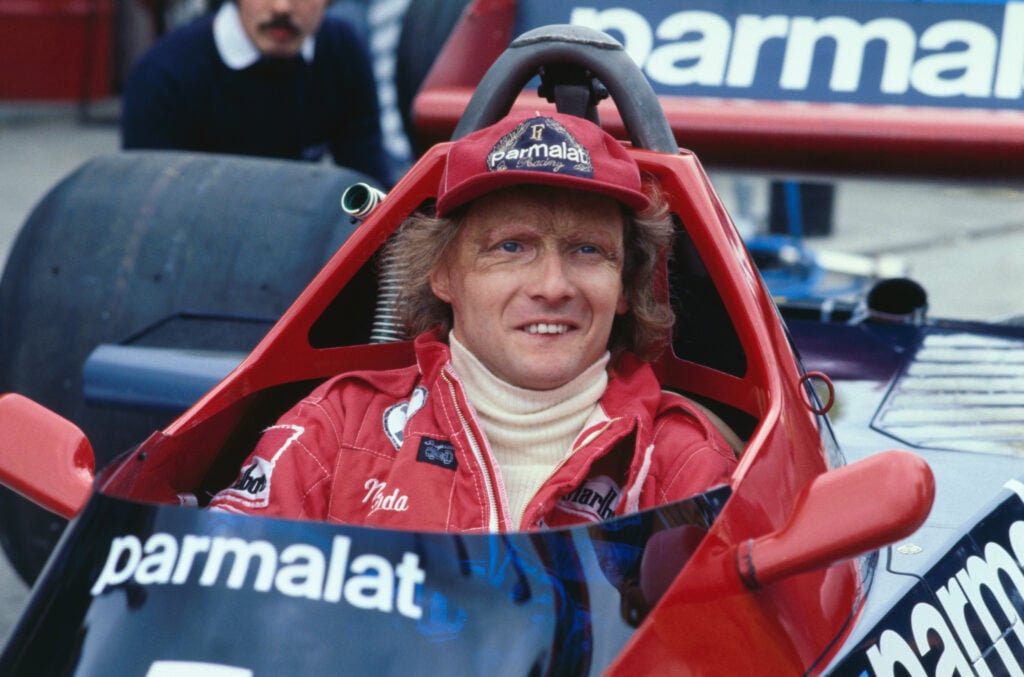
Niki Lauda has one of the most remarkable stories in Formula 1 history.
The Austrian was a pay driver, having used bank loans to finance his seat in Formula Two and F1.
His teammate at BRM, Clay Regazzoni, was so impressed by Lauda’s performances that he insisted Enzo Ferrari must sign him.
Lauda joined Ferrari in 1974 and famously informed Il Commendatore that the car was ‘a piece of s—‘ but that he could make it race-worthy at his first test.
In his debut race for the Italian team, Lauda scored second place in Buenos Aires, then he achieved his first win three races later at the Spanish Grand Prix, Ferrari’s first win since 1972.
He scored six consecutive pole positions that year but only managed fourth in the Drivers’ Championship with a further win coming at the Dutch Grand Prix in Zandvoort.
In 1975, the Vienna native won his first World Championship with victories in Monaco, Belgium, Sweden, France and the USA. This was the Scuderia’s first Drivers’ and Constructors’ championships since John Surtees in 1964.
He looked set to win a second with The Prancing Horse in 1976, winning four of the first six races. By his fifth win, he had more than double the points of his closest challengers, Jody Scheckter and James Hunt.
Then the 1976 German Grand Prix at the Nürburgring was upon them, and Lauda was urging his fellow drivers to boycott the race, fearful of the safety arrangements for such a large circuit.
The other competitors did not heed Lauda and elected for the race to go ahead at ‘The Green Hell’.
This decision proved fateful for the Austrian as his Ferrari swerved off the track, hit an embankment and burst into flames, bouncing back onto the track and colliding with Brett Lunger.
Lauda was trapped in the car, but his fellow drivers stopped to free him from the wreckage, with Arturo Merzario pulling him out. By this time, he had suffered severe burns to his head and hands and had inhaled hot, toxic gases, which damaged his lungs and blood.
Hunt would win the race, but in an extraordinary feat, Lauda would return to racing six weeks later after recovering through sheer force of will and would finish fourth in the Italian Grand Prix despite the blood-soaked bandages he wore. He defied all expectations.
He had a famous on-track rivalry with Hunt, and his accident had allowed the Brit to catch up in the title fight- he was only three points behind Lauda by the final race of the season in Japan.
Torrential rain at the Fuji circuit led Lauda to withdraw from the race after two laps. Hunt led much of the race before a pit stop dragged him down the order. A magnificent recovery to third sealed the Brit’s championship win by one point, with ‘Hunt the Shunt’ coming out on top of ‘The Rat’.
The relationship with Ferrari was damaged by his withdrawal, and Lauda clinched the 1977 title by consistency rather than sheer pace. He would then leave the Rosso Corsa giants.
Lauda would also drive for Brabham, but it was McLaren where he would win his third title in 1984 after a return from retirement in 1982.
He would win the title by half a point against his teammate, Alain Prost, as the Monaco Grand Prix was shortened due to wet weather. He became the only Austrian to win his home Grand Prix in Spielberg and, together with his teammate, dominated the season.
The McLaren drivers won 12 out of 16 races that year, with Lauda winning five. The Austrian rarely matched his teammate in qualifying, but his calculating drive in Portugal gave him enough points to secure the title. As such, he is the only driver to win a championship with both McLaren and Ferrari.
He won 25 Grands Prix across 13 seasons, and at the time of his retirement, he held the record for the most podium finishes with 54.
7. Max Verstappen
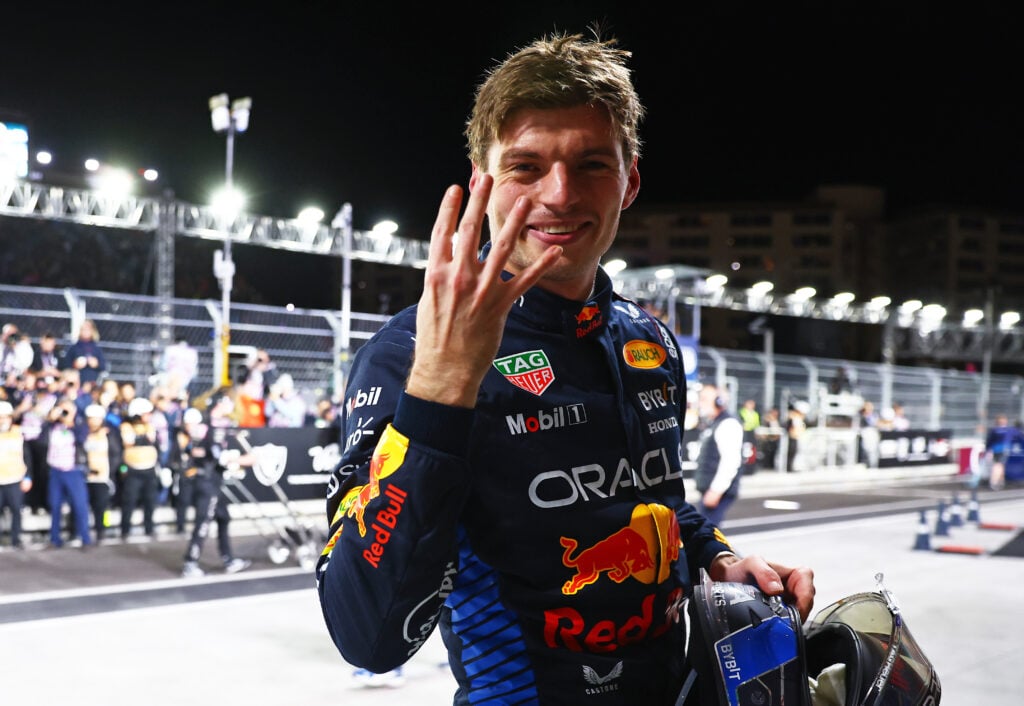
Can Max Verstappen be considered the greatest just yet? Perhaps not, but he deserves a mention.
A four-time World Champion in consecutive seasons, aged 27, the Dutchman has dominated seasons.
With 65 Grand Prix wins to his name in 11 seasons, Verstappen made history as the youngest driver to start a Formula 1 race aged just 17.
At the 2016 Spanish Grand Prix, Verstappen became the youngest driver to win a race, aged just 18. As a result, he eclipsed Sebastian Vettel’s record by three years.
Following this magnificent achievement, Martin Brundle predicted he would be accused of ‘ruining F1’ with his dominance in the future- an accurate premonition.
In his first eight races with Red Bull, he achieved six top-five finishes, including four podiums.
In 2019 and 2020, he finished third in the championship and began to be known for dominating his teammates.
‘The Dutch Lion’ has not had a significant challenge since the departure of Daniel Ricciardo from Red Bull and has outperformed Pierre Gasly, Alex Albon, Sergio Pérez, Liam Lawson and Yuki Tsunoda.
Alex Albon has said that Verstappen favours an eye-wateringly sharp front end that continually gets sharper over the season, which he has mastered, but it requires a teammate to go quicker and take more risks and thus make more mistakes.
Then in 2021, he had a hard-fought battle with the then-reigning World Champion Lewis Hamilton for the championship, becoming the first Dutch driver to lead and subsequently win the Drivers’ Championship.
The two drivers were level on 369.5 points going into the final race at Yas Marina Circuit, but the race was filled with controversy, most notably the safety car protocol following Nicholas Latifi’s crash, where the lapped cars were permitted to overtake the safety car. This allowed Verstappen to pass his title rival when racing got underway, but could not discredit his excellent season, where he showed fearlessness and tenacity.
He dominated in 2022 with 15 race victories, breaking the record of thirteen race wins in a season shared by Michael Schumacher and Sebastian Vettel. ‘The Flying Dutchman’ won the championship with 454 points, beating Hamilton’s 2019 record of 413.
In 2023, the 25-year-old Verstappen won ten consecutive races in a season, beating Sebastian Vettel’s record of nine. He even broke his records, winning 19 races that season and scoring 575 points, which was more than double what his teammate Pérez scored.
In 2024, Verstappen became the first driver to win a title for a third-placed team in the World Constructors’ Championship since Nelson Piquet won with Brabham in 1983.
His performance in the rain in São Paulo was lauded as one of the great wet-weather drivers, with the Dutchman finishing 19 seconds ahead of the second-placed driver, which was unimaginable considering he started the race in 17th due to an engine penalty. He gained seven places on the opening lap and overtook Esteban Ocon for the lead, setting ten of the 11 fastest laps of the race.
In 2025, he has been battling hard with the McLarens of Oscar Piastri and Lando Norris and was acclaimed for a daring first lap overtake on Piastri at Tamburello in the Emilia Romagna Grand Prix, which some have said was his greatest to date.
6. Sebastian Vettel
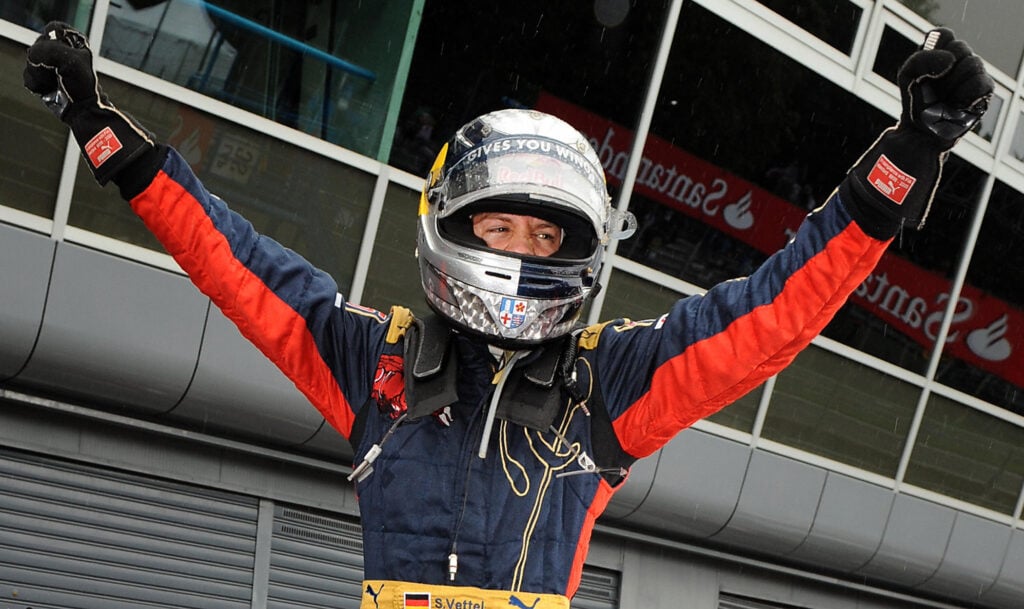
In the 2010s, Sebastian Vettel was a dominant force. Before there was Max Verstappen, there was Vettel.
He converted his maiden pole into victory at the 2008 Italian Grand Prix and was, at that time, the youngest driver to win an F1 Grand Prix, finishing 12.5 seconds ahead of Heikki Kovalainen at just 21.
Following his promotion from Toro Rosso to Red Bull in 2009, he finished runner-up to Jenson Button in the Drivers’ Championship.
But it was the 2010s where he forced the world to take notice, winning four consecutive World Championships with Red Bull.
He won his first World Championship in 2010 and became the youngest World Drivers’ Champion in the sport’s history, aged 23.
He was at that time the only driver to win a World Championship for the Austrian team.
However, it was not plain sailing as he went into the final race of the season in Abu Dhabi with a 15-point deficit to Fernando Alonso and a seven-point gap to his teammate Mark Webber. With Alonso only managing seventh, Vettel won the race from pole and realised a lifelong dream.
His second championship was a dominant performance and earned him the record of most pole positions in a season with 15. By the end of the 2011 season, he had 11 victories and 17 podiums from 19 races.
His third championship in 2012 was won after a collision with Bruno Senna in Brazil rendered him last, forcing the Heppenheim driver to fight through the grid and finish sixth, having also been hindered by a slow pit stop.
The German famously had a rivalry with Webber while at Red Bull and defied team orders to overtake the Australian at the 2013 Malaysian Grand Prix and win the race despite being told to keep position.
Vettel was a force to be reckoned with on his day and drove fear into the hearts of his competitors. After 16 seasons in F1, he had won a remarkable 53 races.
5. Alain Prost
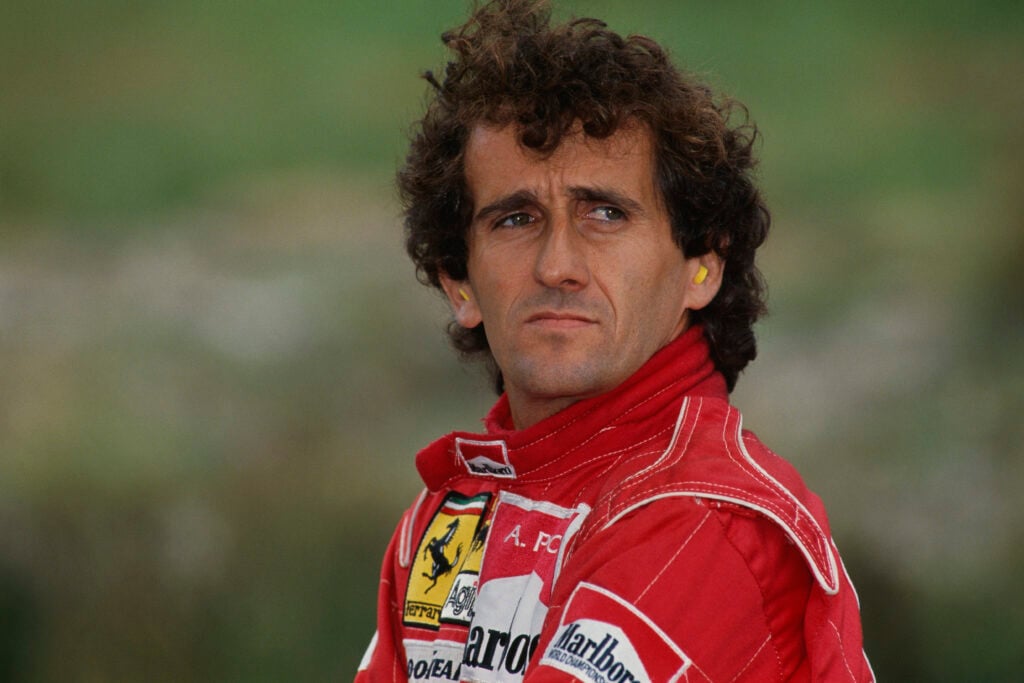
Alain Prost is an iconic name in Formula 1.
Famed for his rivalry with Ayrton Senna, the Frenchman won four championships in 1985, 1986, 1989 and 1993.
He won 51 races in his career, which was a record, and his first victory came at the 1981 French Grand Prix at Dijon. He won nine races during three seasons with Renault but felt like the scapegoat for failing to win a championship.
‘The Professor’ then turned his attention to McLaren, where he won 30 races and three titles in six seasons and was twice a runner-up.
In 1985, he became the first French World Champion, followed in 1986 by becoming the first back-to-back champion since Jack Brabham 26 years earlier.
Then in 1988, his seven race wins contributed to McLaren’s season total of 15 victories from 16 races.
However, the other eight were won by Senna, who clinched the title at the end of the season.
| Prost’s Wins | Senna’s Wins |
| Brazilian Grand Prix | San Marino Grand Prix |
| Monaco Grand Prix | Canadian Grand Prix |
| Mexican Grand Prix | Detroit Grand Prix |
| French Grand Prix | British Grand Prix |
| Portuguese Grand Prix | German Grand Prix |
| Spanish Grand Prix | Hungarian Grand Prix |
| Australian Grand Prix | Belgian Grand Prix |
| Japanese Grand Prix |
Only one race was not won by the McLaren duo in 1988- the Italian Grand Prix in Monza was won by Gerhard Berger with the Austrian winning with Ferrari in front of the tifosi.
Prost could not match Senna’s raw speed and had to rely on an economical and conservative style to enable him to make a late challenge.
The embittered rivalry in 1989 led to Prost accusing the Brazilian of ‘dangerous driving’, resulting in a clash at the chicane at Suzuka where he closed Senna off to take his third championship win.
The French driver then moved to Ferrari in 1990, winning five races and battling Senna for the title, which resulted in Senna’s McLaren deliberately driving into Prost’s Ferrari for the season finale.
He won his fourth and final title with Williams-Renault after falling out with Ferrari and taking a break from racing. He won seven more races before he retired, avoiding Senna becoming his Williams teammate.
4. Juan Manuel Fangio
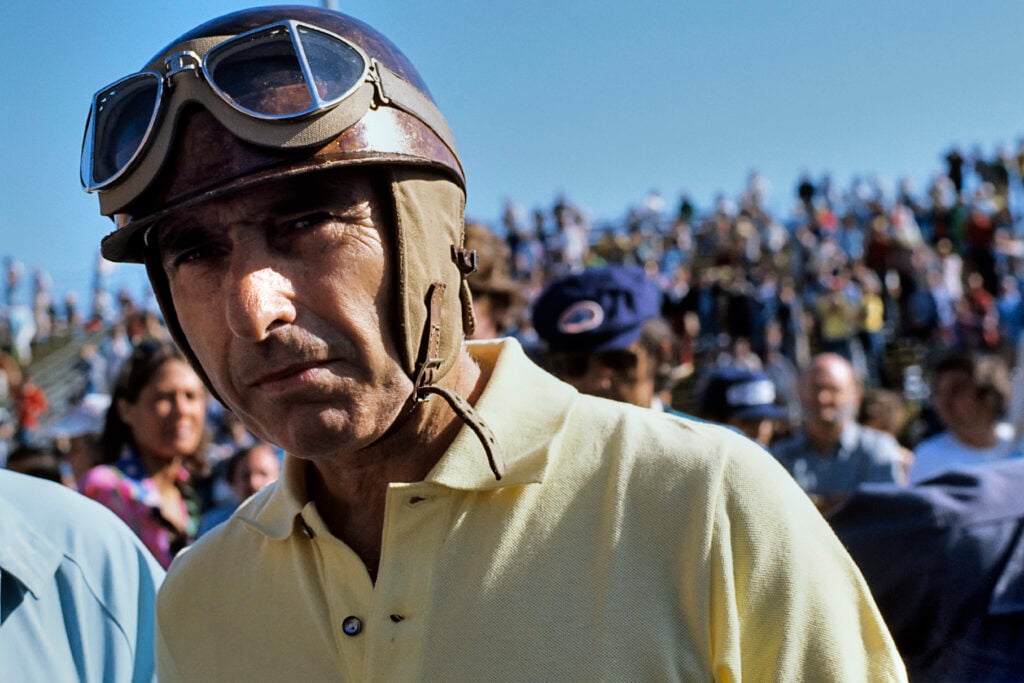
Juan Manuel Fangio was the star of the 1950s, defining the first era of F1.
He won five World Championships, four of which were consecutive and is the only driver in the sport’s history to win titles with four different teams, winning with Alfa Romeo, Maserati, Mercedes-Benz and Ferrari.
The Argentine holds the highest winning percentage in F1 at 46.15%, winning 24 out of 52 races he entered and the highest pole percentage at 55.77% with 29 pole positions from 52 entries.
He achieved much in his relatively short career. He began racing in F1 when he was 38, but by the end of his career, he had achieved 24 wins, 35 podiums and 29 pole positions.
In 1956, the Argentine was forced to retire his car due to a broken steering arm and thought surely his fourth championship was over when his Ferrari teammate, Luigi Musso, was asked to give his car to Fangio.
Musso refused, and in an act of great sportsmanship, Peter Collins, another Ferrari driver, gave Fangio his car and forfeited the opportunity to win his first championship. As a result, the Buenos Aires native won the championship and was very grateful to the British driver.
He won his last title aged 46 in 1957 against competitors who were largely younger than him and were more privileged than his humble origins.
Nicknamed ‘El Maestro’ and ‘El Chueco’ or the master and the bow-legged one, respectively, Fangio attained his skill, strength and stamina through long-distance races in South America.
In an extremely perilous era of Formula 1 with no safety precautions, Fangio showed incredible courage and mental fortitude to concentrate on his goal through three-hour Grand Prix races.
During his last career victory, ‘El Maestro’ hauled his Maserati around the notoriously difficult Nürburgring, following a disastrous pit stop in which he lost almost a minute to the Ferraris. He smashed the lap record to pieces in a magnificent drive before choosing to retire from the sport.
3. Ayrton Senna
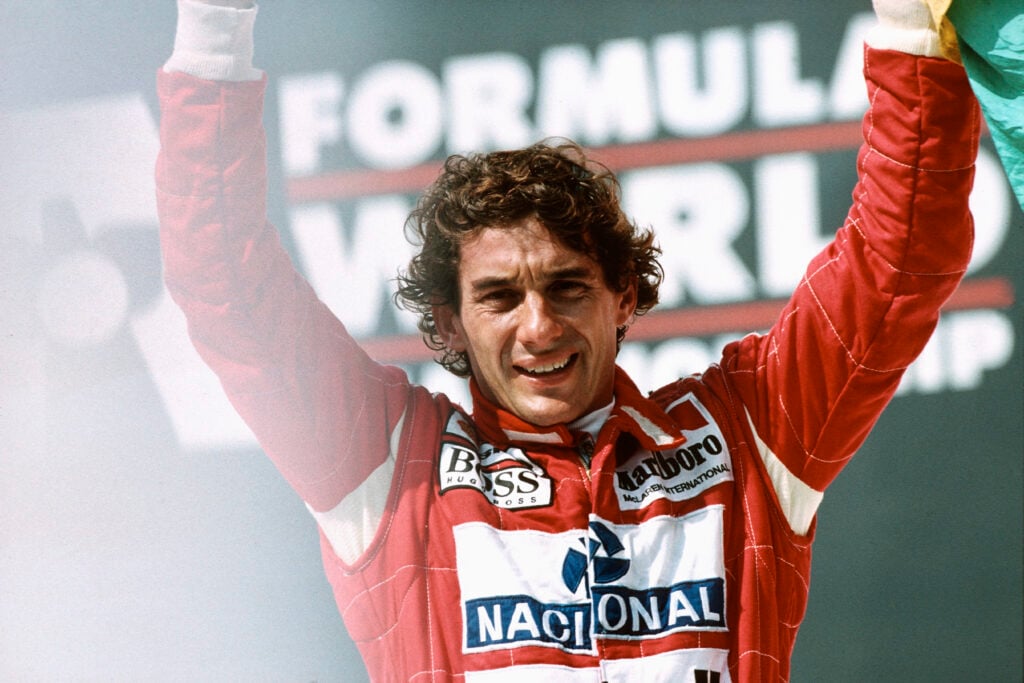
Ayrton Senna is still hailed by some as the greatest of all time, and it is impossible to know how far he could have gone with his career, which was tragically cut short by his death in 1994.
A three-time World Champion in 1988, 1990 and 1991 and going for a fourth at the time of his death, Senna was acclaimed for his raw speed and aggressive driving style.
He was 20 points behind Schumacher going into Imola in 1994 and racing hard when his steering column snapped, causing him to hit the concrete barrier at the high-speed corner Tamburello.
He converted his first pole into his first win at the 1985 Portuguese Grand Prix with Lotus, beating the Ferrari of Michele Alboreto by over a minute in wet conditions.
But he was by far the most impressive at McLaren.
He was a genius in qualifying and beat his teammate Alain Prost by 1.4 seconds at the 1988 Monaco Grand Prix, qualifying on pole position- a lap that Senna described as ‘no longer driving consciously. I was in a different dimension.
His prowess at this difficult circuit in the French Riviera led to him being nicknamed ‘the King of Monaco’, where he reigned supreme a record six times in his career, five of which were consecutive between 1989 and 1993.
Martin Brundle explains how the ‘Maestro of Monaco’ wrote himself into F1 folklore with heroic skill
His iconic rivalry with Prost is widely renowned in F1, in part due to their differences.
Senna enjoyed risky overtakes and uncompromising defending and was arguably the fastest Formula 1 driver over a single lap.
Prost favoured a smooth, relaxed style and hated taking risks and driving in the rain, in direct contrast to Senna.
The Brazilian’s legendary response to Jackie Stewart lives long in the sport’s memory: ‘If you no longer go for a gap that exists, you’re no longer a racing driver’. It was invoked in a similar vein by Lewis Hamilton following a crash with Nico Rosberg at the 2016 Spanish Grand Prix, showing even Senna’s words have had a huge impact on the sport’s culture.
The 1993 Spanish Grand Prix saw Senna, Prost and Schumacher share the podium – a feat which would never be repeated.
He became a national hero in his native Brazil and won 41 races in his career with 80 podiums and 65 pole positions.
2. Michael Schumacher
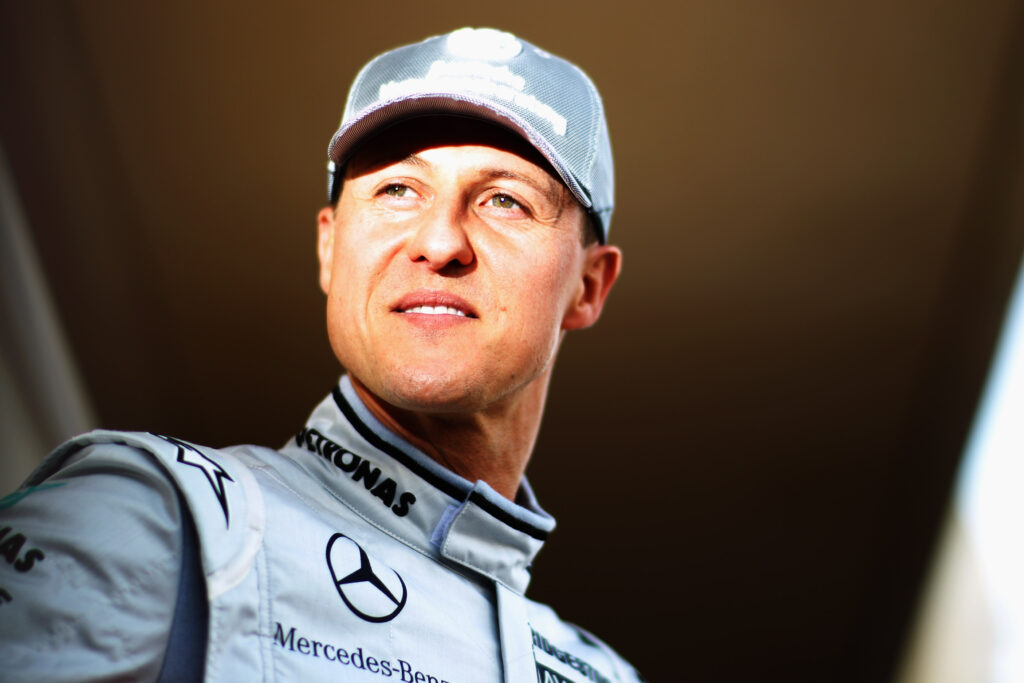
A seven-time World Champion, chances are you have heard of Michael Schumacher.
The German outqualified Nelson Piquet, a three-time World Champion, four out of five times in his first season at Benetton.
He masterfully won his first race in a wet Spa-Francorchamps, beating the two Williams drivers of Nigel Mansell and Riccardo Patrese, therefore becoming known as the Regenmeister or rain master.
He won his first World Championship with Benetton in 1994, following the death of Senna, whose crash Schumacher witnessed and took his second title in 1995.
Schumacher then moved to Ferrari, who had not won a Drivers’ championship since 1979 and were a mere shadow of their former glory during the 1990s.
‘The Red Baron,’ as he became known, completely revitalised the team.
He lapped up to third place in the wet during the 1996 Spanish Grand Prix, taking his first win for the Scuderia before fighting for the title against Jacques Villeneuve in 1997.
In a controversial final race, Schumacher was disqualified from the entire 1997 World Championship for turning in on Villeneuve, a moment he subsequently regretted. Villeneuve went on to win the championship that year.
From 2000 to 2004, he won five consecutive World Championships with Ferrari, taking his tally up to seven, then the most of any driver. With this achievement, he broke Fangio’s record of consecutive titles that had stood for nearly fifty years.
Martin Brundle discussed what made Schumacher so special with those who knew him best.
His record stands at 91 wins, 155 podiums, and 68 pole positions, and his work ethic and sheer talent have been widely lauded.
1. Lewis Hamilton
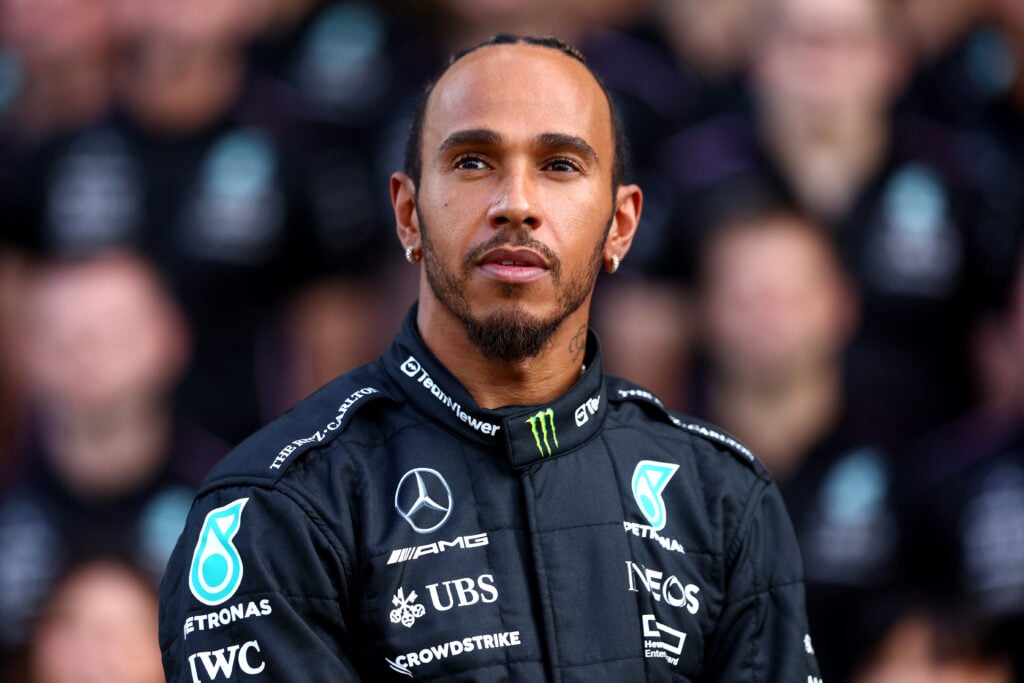
Lewis Hamilton has a simply astonishing record in Formula 1.
The Brit is tied on seven World Championships with Schumacher, equalling his record in 2020 with Mercedes.
Let’s not forget he came dangerously close to breaking that record in 2021, pipped to his eighth title by Max Verstappen in that fatefully controversial final race in Abu Dhabi.
It is inconceivable just how many records the Stevenage driver has broken.
Currently, he has the most wins, most pole positions and most podium finishes, all surpassing 100, as well as the most career points with 4933.5, but the list does not end there.
He has had some epic rivalries with two-time World Champion Fernando Alonso, Sebastian Vettel, Nico Rosberg and Verstappen.
His fearsome rivalry with Alonso, then his teammate, in his debut season, did not faze him.
Hamilton’s first season was electric; his blistering pace earned him nine podiums, four victories and 109 points.
The rookie narrowly missed out on the championship by a single point to the Finnish Ferrari driver Kimi Räikkönen due to fighting his Spanish McLaren teammate.
Then the following year, he dramatically won the World Championship by one point, overtaking German Timo Glock on the last lap.
To this day, he is the only black driver to ever compete in the sport and has had a huge impact on the diversity in F1.
His legacy has inspired the sport and has had a huge impact on his fellow drivers, with former teammate George Russell learning ‘there is not just one path to success’
The rest is history, and now the Brit aims to win that coveted eighth with the sport’s most successful team: Ferrari.